
A closer look at the strength of clay dikes, The Netherlands
Deltares and the Waterschap Drents Overijsselse Delta are conducting in-depth research into the strength of clay layers in dikes, commissioned by the High Water Protection Programme (HWBP). Specifically, the focus lies on the upper unsaturated zone. This is the section of the dike that is typically dry, but becomes saturated during periods of elevated river water levels. The current research is taking place near Herxen along the IJssel River, though the findings will have relevance for all clay dikes throughout the Netherlands.
Key information
- Project name: A closer look at the strength of clay dikes
- Date: Until end of winter 2025
- Client: Hoogwaterbeschermingsprogramma (HWBP)
- Location: Along the river IJssel, near Herxen
- Size: Involves several measurement locations, including:
- 3 main measurement locations
- 8 ‘light locations’ spread across the Netherlands
Reassessing Soil Strength
Earlier studies have shown that the soil in this critical unsaturated zone is more robust than previously assumed. This suggests that clay dikes may be more stable, potentially requiring less reinforcement than initially thought. These insights are valuable for improving how clay dikes are constructed and maintained, especially since soil strength fluctuates with the seasons due to changes in moisture levels from rainfall and evaporation.
Take winter, for example: higher moisture levels generally reduce the soil’s shear strength, the ability of soil to resist sliding. Yet even during the wettest months, the measured strength has been higher than expected. This finding could allow for more efficient stability assessments, since prior calculations were based on more conservative estimates.
Although the initial results are promising, some uncertainties remain. As a result, the study has been broadened to include a third main test site at the IJsseldijk near Paddenpol, along with eight light locations in various water board regions, each representing a distinct clay profile common in the Netherlands.

Talk to our experts

MOS Grondmechanica
Innovative Soil Testing Methods
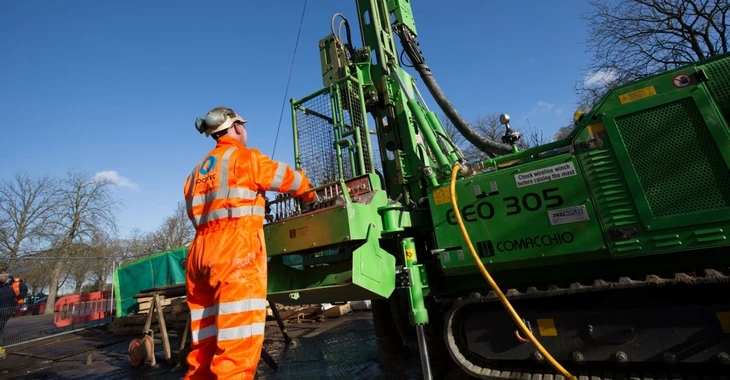
The fieldwork is being carried out by MOS Grondmechanica (part of SOCOTEC), using a number of advanced testing methods. One key technique is probing with a dielectric cone, which measures both the water content (saturation level) and capillary suction within the soil. This is done in-situ alongside high-quality Class 1 cone penetration testing (CPT). At each test location, two CPTs are performed every 5 to 10 weeks, ensuring data collection throughout the year. A special series of tests at the Paddenpol site near Herxen involves extremely slow probing, up to 200 times slower than standard speed. This unique approach helps determine how probing speed influences strength measurements. Custom adjustments were made to the equipment and software to ensure accurate results at these ultra-slow speeds. In addition, Field Vane Tests (FVTs) are carried out at various depths and locations to directly measure undrained shear strength in the field.
MOS Grondmechanica is also conducting mechanical drilling to collect both disturbed and undisturbed soil samples. These are then tested in laboratories at Deltares and MOS Grondmechanica, including classification and strength testing. Strength tests are performed using the Unconsolidated Undrained (UU) method, which simulates the natural state of the unsaturated zone as closely as possible.
The fieldwork is being carried out by MOS Grondmechanica (part of SOCOTEC), using a number of advanced testing methods. One key technique is probing with a dielectric cone, which measures both the water content (saturation level) and capillary suction within the soil. This is done in-situ alongside high-quality Class 1 cone penetration testing (CPT). At each test location, two CPTs are performed every 5 to 10 weeks, ensuring data collection throughout the year. A special series of tests at the Paddenpol site near Herxen involves extremely slow probing, up to 200 times slower than standard speed. This unique approach helps determine how probing speed influences strength measurements. Custom adjustments were made to the equipment and software to ensure accurate results at these ultra-slow speeds. In addition, Field Vane Tests (FVTs) are carried out at various depths and locations to directly measure undrained shear strength in the field.
MOS Grondmechanica is also conducting mechanical drilling to collect both disturbed and undisturbed soil samples. These are then tested in laboratories at Deltares and MOS Grondmechanica, including classification and strength testing. Strength tests are performed using the Unconsolidated Undrained (UU) method, which simulates the natural state of the unsaturated zone as closely as possible.
Smarter, more efficient reinforcement
This research builds on earlier findings and is expected to produce nationally applicable guidelines for dike managers. The ultimate aim is to help develop more sustainable and cost-effective reinforcement strategies, ensuring long-term safety while keeping expenses under control.
The research continues through the end of winter 2025, with final results anticipated in 2026.
Want to know more about our services in the Netherlands?