
Welcome Home – Harvard Street, USA
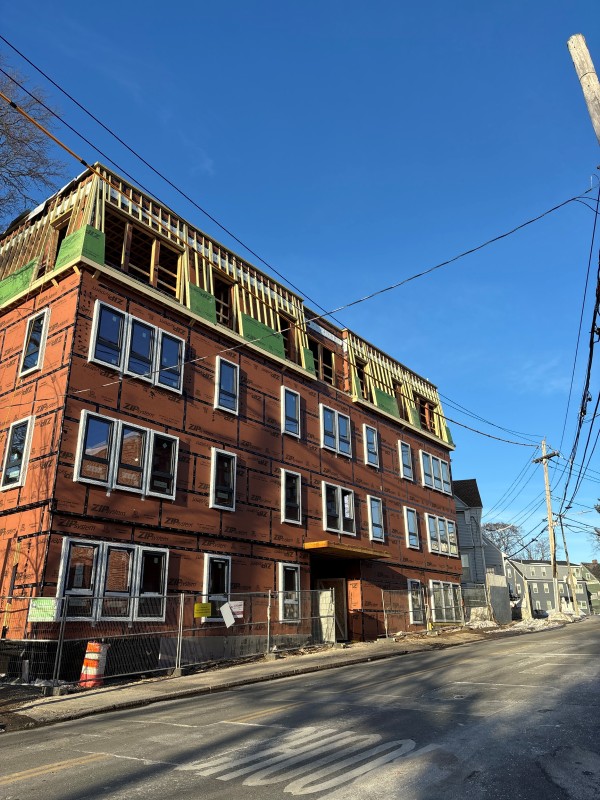
SOCOTEC US supported the Welcome Home Harvard Street development in Boston, a major affordable housing initiative combining urban regeneration with high environmental performance objectives.
Key informations
- Project Name: Welcome Home Harvard Street
- Clients: Studio Luz Architects (Architect), Boston Communities (Developer), South Shore Construction Consultants (MEP), ClearResult
- Location: 77-81 Harvard Street, Dorchester, Massachusetts
- Timeline: 2024–2026
- Services Provided: Passive House Consulting, Energy Code Compliance, Mass Save Incentives
- Certification: Phius Design Certification

Talk to our experts

Delivering affordable housing within technical and environmental constraints
The Welcome Home Harvard Street project is part of Boston’s broader effort to expand access to affordable homeownership for low and moderate-income residents.
The development had to address several complex challenges, including:

1# Achieving Passive House certification requirements as mandated under the Massachusetts Opt-In Stretch Code 2023
2# Delivering high-quality residential units within affordability requirements
3# Complying with stringent Massachusetts energy and sustainability regulations
4# Integrating new construction into an established urban neighborhood in Dorchester
5# Ensuring alignment between architectural design and technical constraints
6# Coordinating multiple stakeholders across design, engineering, and public housing objectives
The project required a careful balance between social ambition, regulatory compliance, and long-term building performance.
What is a Passive House?
Passive House is a voluntary performance-based energy standard that represents the most rigorous approach to building energy efficiency. The standard focuses on five key principles: superior insulation, airtight construction, high-performance windows and doors, heat recovery ventilation systems, and mitigation of thermal bridges. Buildings certified to the Passive House standard consume 75 to 90% less energy for heating and cooling compared to conventional construction, while providing exceptional thermal comfort and superior indoor air quality year-round.
The Solution
Technical and sustainability support across the project lifecycle
Our role included:
- Delivering Certified Passive House Consultant (CPHC) services to support the project’s Passive House goals
- Supporting the project through the Phius Core 2021 v3.2 certification pathway
- Performing WUFI hygrothermal analysis to evaluate envelope performance and moisture behavior
- Conducting building envelope and thermal bridge analysis
- Coordinating Mass Save incentive requirements and supporting compliance
- Supporting alignment with the Massachusetts Stretch Energy Code
This approach ensured that energy efficiency, certification requirements, and long-term building performance were effectively integrated into the project’s design and construction.
Our role included:
- Delivering Certified Passive House Consultant (CPHC) services to support the project’s Passive House goals
- Supporting the project through the Phius Core 2021 v3.2 certification pathway
- Performing WUFI hygrothermal analysis to evaluate envelope performance and moisture behavior
- Conducting building envelope and thermal bridge analysis
- Coordinating Mass Save incentive requirements and supporting compliance
- Supporting alignment with the Massachusetts Stretch Energy Code
This approach ensured that energy efficiency, certification requirements, and long-term building performance were effectively integrated into the project’s design and construction.
Sustainable housing delivered for the Boston Community
The project delivered significant outcomes in terms of housing, sustainability, and urban development:
1#
Creation of new affordable homeownership opportunities in Dorchester, Massachusetts
2#
Achievement of Phius Design Certification, confirming a high level of energy performance
3#
Compliance with the Massachusetts Commercial Stretch Energy Code (225 CMR 23) and the Municipal Opt-in Specialized Code 2023
4#
Improved energy efficiency and environmental performance of the residential buildings
This project demonstrates how technical expertise can support the delivery of inclusive, energy-efficient housing at scale.
Planning your next passive house project?

