
Advanced monitoring technologies and real-time structural control for Riccardo Morandi’s iconic airport hangars, Italia
The Avio 4 and 5 Hangars at Rome Fiumicino International Airport, designed in the late 1970s by Professor Engineer Riccardo Morandi, are among the most remarkable examples of Italian airport engineering. As part of the maintenance works on the stay cables and elevated structural elements, SOCOTEC contributed to the implementation of an advanced structural health monitoring system designed to ensure continuous control, operational safety, and real-time data acquisition throughout all maintenance activities.
Key information
- Project Name: Intelligent Structural Monitoring of Avio 4-5 Hangars
- Client: ADR Infrastrutture
- Location: Leonardo da Vinci International Airport – Fiumicino, Rome
- Period: 2024 – 2025

Talk to our experts


Project details
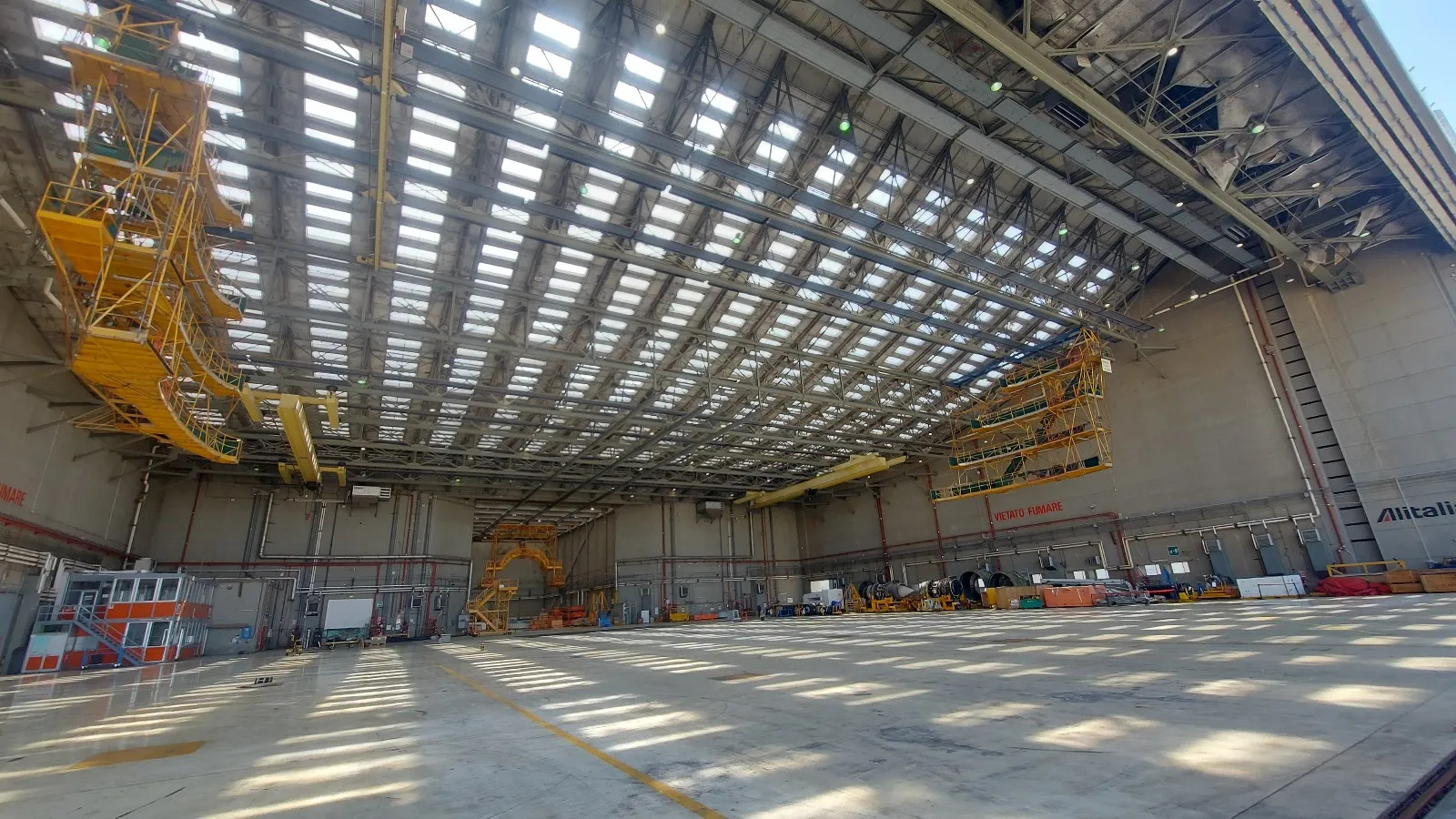
The Avio 4 and 5 Hangars at Fiumicino Airport represent one of the most significant examples of structural engineering applied to airport infrastructure. Originally designed to accommodate Boeing 747 maintenance operations, the twin hangars are distinguished by the innovative roof system conceived by Professor Engineer Riccardo Morandi.
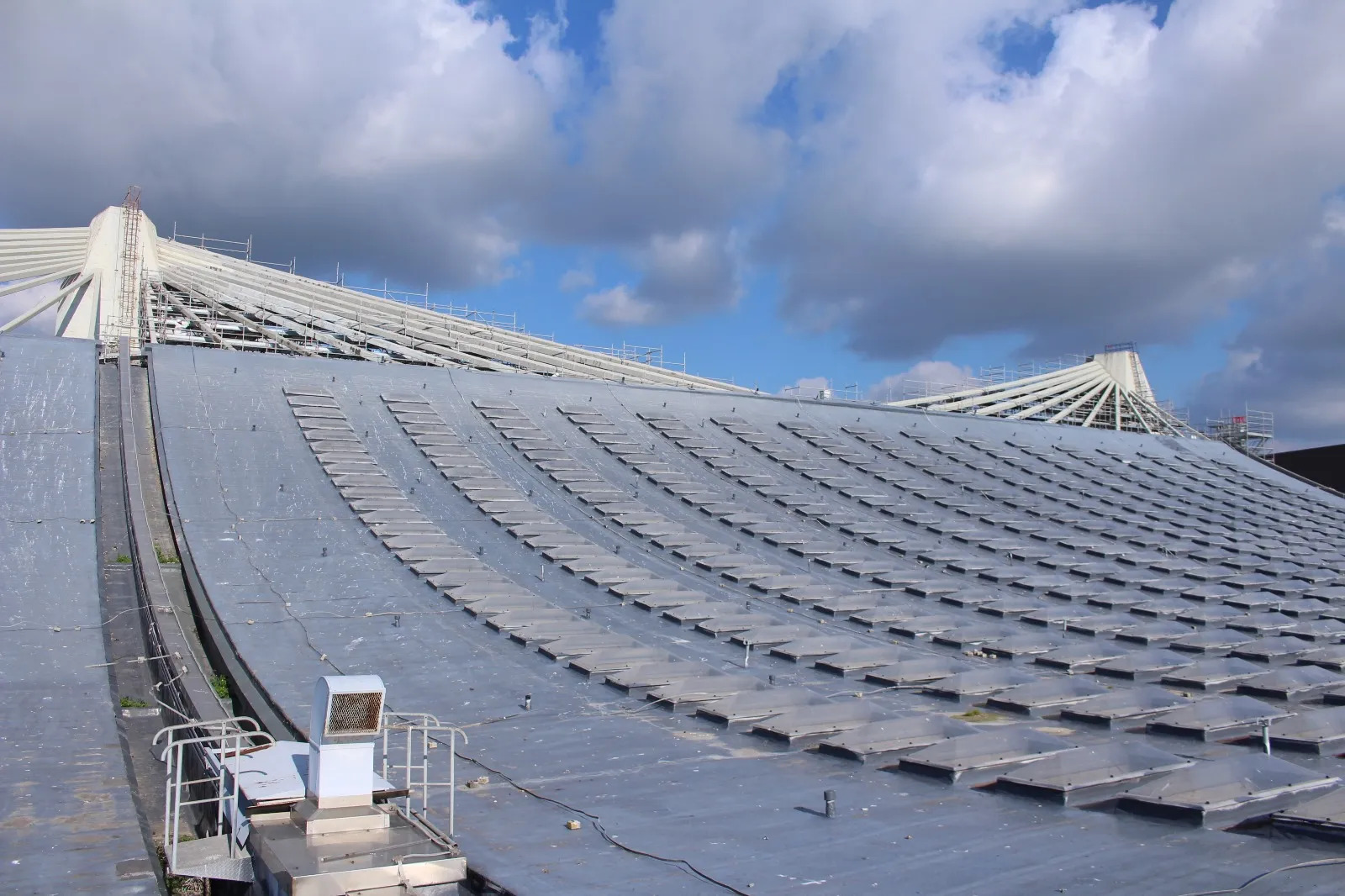
The structure combines prestressed parallel beams in the front section with a complex post-tensioned tensile roof system in the central and rear areas. The roof consists of post-tensioned membrane elements arranged at regular intervals and connected through slabs and edge beams supported by stay cables. This sophisticated structural configuration requires constant monitoring and high levels of control during maintenance operations.
As part of the maintenance works on the stay cables and elevated structural components, ADR Infrastrutture awarded the temporary joint venture composed of DIAMONDS, SOCOTEC Italia and SOCOTEC Monitoring Italy the contract for the supply, installation, and management of an advanced structural monitoring system.
The main objective of the project was to ensure continuous monitoring of the structural behavior of the hangars during all maintenance activities while minimizing operational risks and guaranteeing uninterrupted airport operations.
Activities performed
SOCOTEC contributed to the implementation of an intelligent structural monitoring system based on advanced automatic data acquisition and real-time supervision technologies.
The activities included:

1#
Installation of automatic total stations for deformation monitoring.
2#
Dynamic monitoring using biaxial and triaxial accelerometers.
3#
Installation of high-precision displacement transducers.
4#
Implementation of temperature sensors for thermo-structural analysis.
5#
Installation of cameras for remote supervision.
6#
Configuration of data acquisition units and monitoring platforms.
7#
Remote data transmission through 4G connectivity.
8#
Georadar investigations aimed at identifying potential structural discontinuities.
The entire monitoring system was designed to provide continuous structural control throughout every phase of the maintenance works.
Project challenges
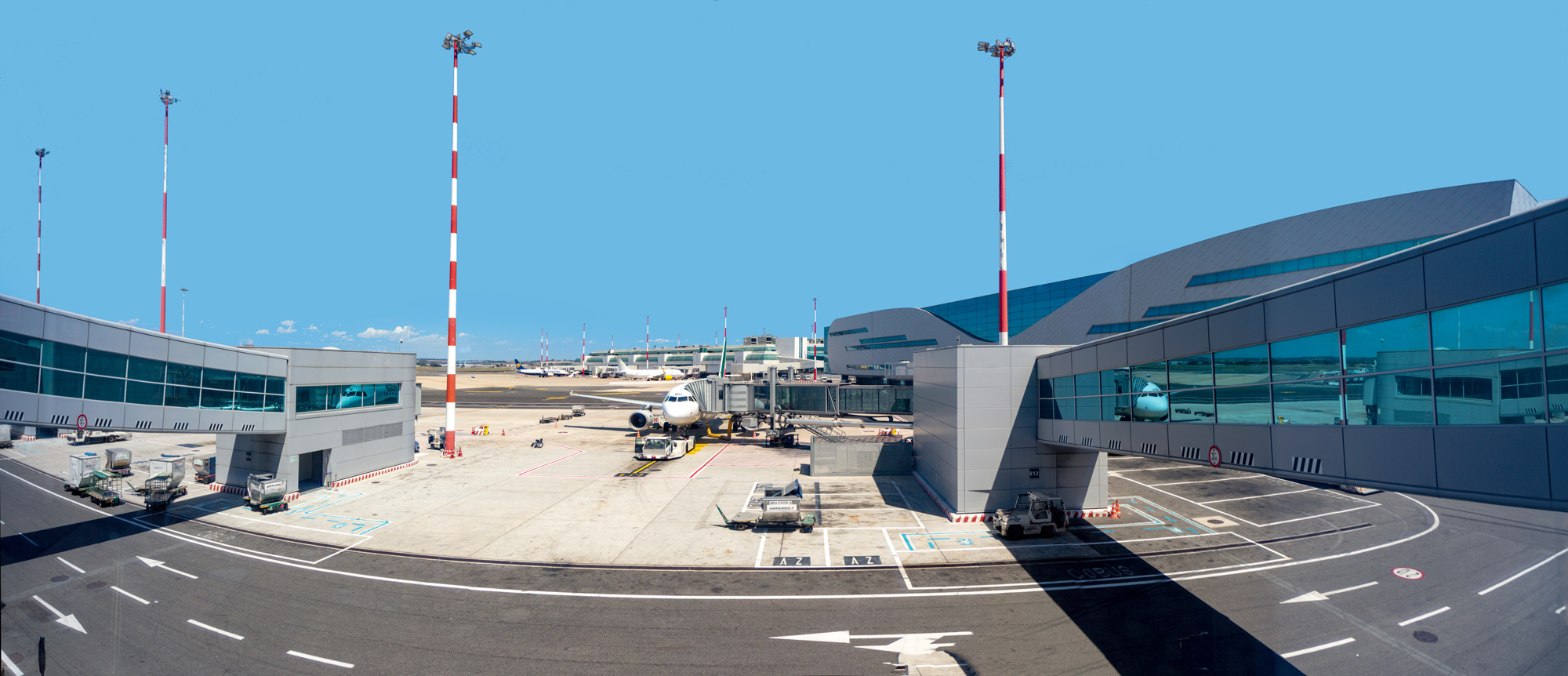
The project was carried out within one of Europe’s busiest international airports, in an environment characterized by strict safety, security, and operational continuity requirements.
All activities required constant coordination with airport operations, management of works within restricted sterile areas, and careful planning according to available operational time windows.
An additional challenge was represented by the unique structural configuration of the Morandi-designed hangars, featuring post-tensioned elements and tensile structural systems that required continuous monitoring during maintenance operations.
The overall project schedule extended over approximately 365 days, with progressive interventions carried out across both hangars.
The project
Added value
The integration of advanced sensors, automatic data acquisition systems, and remote supervision technologies enabled the implementation of a highly reliable continuous structural monitoring system capable of supporting operational and technical decision-making in real time.
The project made it possible to:
- continuously monitor the structural behavior of the hangars;
- enhance safety levels during maintenance operations;
- reduce interference with airport activities;
- support operational decisions through real-time objective data;
- preserve one of the most iconic airport engineering structures designed by Riccardo Morandi.
This project represents a concrete example of how intelligent monitoring technologies can support the management and maintenance of complex strategic infrastructure, further strengthening SOCOTEC’s expertise in advanced structural monitoring for large-scale and special structures.
The integration of advanced sensors, automatic data acquisition systems, and remote supervision technologies enabled the implementation of a highly reliable continuous structural monitoring system capable of supporting operational and technical decision-making in real time.
The project made it possible to:
- continuously monitor the structural behavior of the hangars;
- enhance safety levels during maintenance operations;
- reduce interference with airport activities;
- support operational decisions through real-time objective data;
- preserve one of the most iconic airport engineering structures designed by Riccardo Morandi.
This project represents a concrete example of how intelligent monitoring technologies can support the management and maintenance of complex strategic infrastructure, further strengthening SOCOTEC’s expertise in advanced structural monitoring for large-scale and special structures.
Want to know more about our services in Italia?