

Former military training area in Wittstock, Germany
On the former military training ground in Wittstock, our explosive ordnance disposal team makes a decisive contribution to the safe recovery and clearance of war relics.
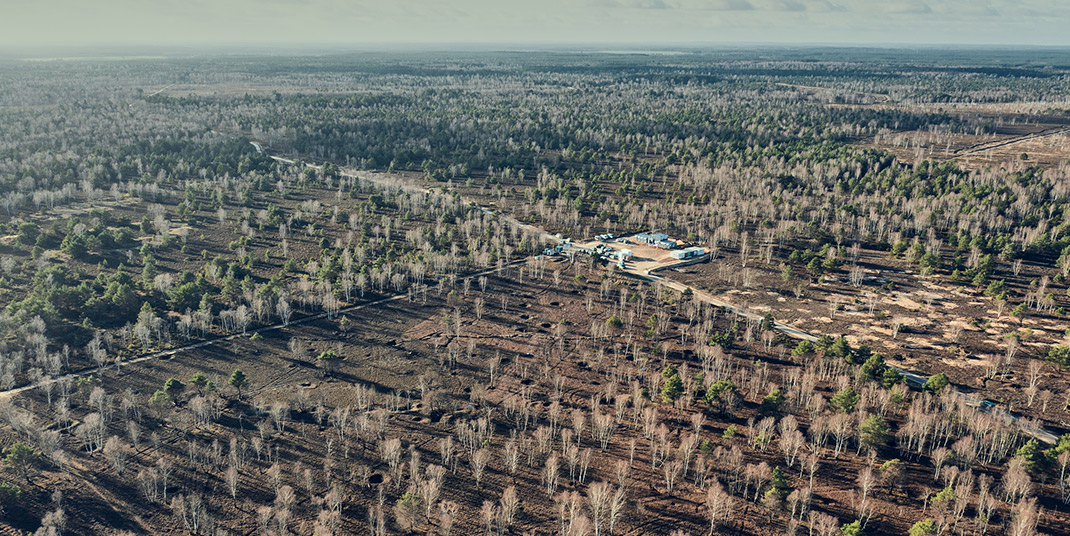
The former Wittstock military training ground in Brandenburg, also known as the “Bombodrom,” was used by Soviet armed forces for live-fire exercises starting in 1952. Since 2018, our explosive ordnance disposal specialists have been working to clear the 11 km² site, which remains heavily contaminated with ammunition—particularly cluster munitions that must be removed in accordance with international standards.

Talk to our experts

Keys informations
- Period: Since 2021
- Client: Federal Agency for Real Estate Tasks
- Location: Wittstock
- Our services: Explosive ordnance disposal, recovery of cluster munitions
- Images: © Roman Thomas
This is a GREEN TRUST project.

Learn more about GREEN TRUST by SOCOTEC and how, through our solutions, we help reduce emissions, conserve resources, and support the ecological and energy transition in construction, real estate, and infrastructure projects.
Structured and safe ordnance clearance
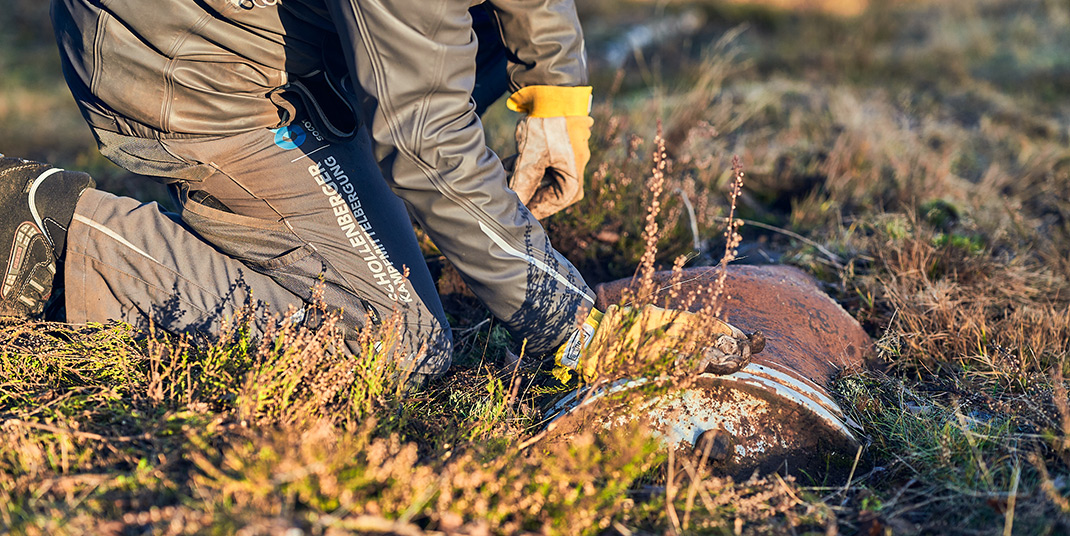
The area around Wittstock was used for decades as a military training ground for both aerial and ground live-fire exercises. As a result, large quantities of unexploded ordnance remain scattered across the site. Particularly challenging are unexploded cluster munitions, which are prohibited under international law. These bomblets are dispersed over wide areas and are extremely difficult to detect. Germany has committed to clearing these hazardous remnants of war, making the Wittstock project one of international significance.
Safety and expertise
Explosive ordnance disposal in Wittstock
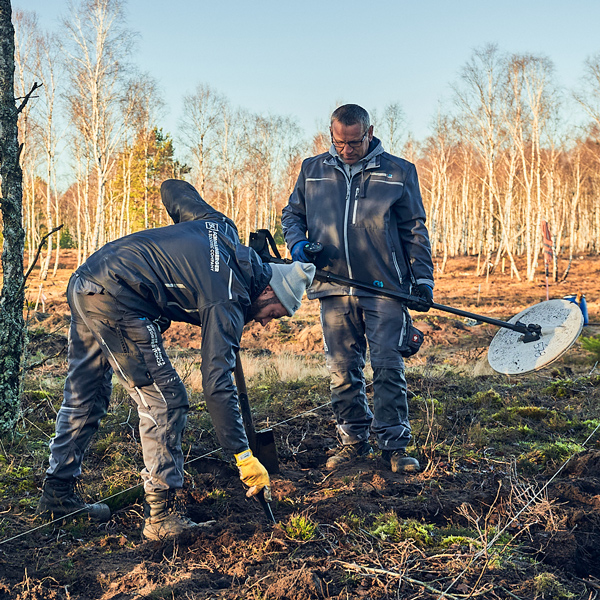
Since our explosive ordnance disposal experts were commissioned in 2018, over several hundred hectares have already been cleared. A clearance team of up to 80 people, supported by machinery and modern detection technologies, systematically searches for dangerous ammunition to a depth of 30 cm. Unexploded ordnance discovered is inspected and destroyed on site. In addition to cluster munitions, large quantities of ammunition scrap and deeper-lying bombs are also found.
Explosive ordnance and ammunition hidden in the ground not only pose a direct danger to people through possible explosions, but also endanger our environment. When toxic substances leak from the ammunition, they can contaminate soil and groundwater and cause long-term damage.
For professional and safe recovery, we rely on our comprehensive expertise and modern technology. Every team member receives intensive training, and the work process is constantly optimized to ensure the highest safety standards. In this project too, our daily practice includes continuous training, risk analyses and precise safety precautions. This strong safety culture is not only the key to protecting our teams, but also crucial for the successful and continuous progress of the project.
Since our explosive ordnance disposal experts were commissioned in 2018, over several hundred hectares have already been cleared. A clearance team of up to 80 people, supported by machinery and modern detection technologies, systematically searches for dangerous ammunition to a depth of 30 cm. Unexploded ordnance discovered is inspected and destroyed on site. In addition to cluster munitions, large quantities of ammunition scrap and deeper-lying bombs are also found.
Explosive ordnance and ammunition hidden in the ground not only pose a direct danger to people through possible explosions, but also endanger our environment. When toxic substances leak from the ammunition, they can contaminate soil and groundwater and cause long-term damage.
For professional and safe recovery, we rely on our comprehensive expertise and modern technology. Every team member receives intensive training, and the work process is constantly optimized to ensure the highest safety standards. In this project too, our daily practice includes continuous training, risk analyses and precise safety precautions. This strong safety culture is not only the key to protecting our teams, but also crucial for the successful and continuous progress of the project.


Want to know more about our services in Germany ?

